Hell, the Ghost World and the Animal World

I am admittedly a little confused, but that’s not unusual.:wink: Reading this sutta sounds so much like the fire and brimstone of fundamentalist preachers. Please correct me, but it sounds here like Buddha was using fear to motivate people to follow the Eightfold path rather than the promise of enlightenment. Reading the descriptions of this ‘Pink Lotus Hell’:

"They lie upon a spread of coals,
they enter a blazing mass of fire.’

“Wrapping them in a net,
they strike them there with iron hammers”

“Next they enter a copper pot,
a blazing mass of fire.
There they roast for a long time,
writhing in the masses of fire”

“The evildoer roasts in
worm-infested water.”

“They enter the Wood of Sword-Leaves,
so sharp they cut their body to pieces.
Having grabbed the tongue with a hook,
they stab it, slashing back and forth.”

“Hard, alas, is the life here
that evildoers endure.
That’s why for the rest of this life
a person ought do their duty without fail”

"As painful as life is said to be in hell,
that’s how long one must dwell there.
That’s why, for those who are pure, well-behaved,full of good qualities,
one should always guard one’s speech and mind.”

And nowhere is the an explanation for the Pink Lotus?

Fine but I don’t need to be threatened to see the benefits of following the Buddha. Why did he think I need to be scared to death?

2 Likes

I think it’s really understandable, but also dangerous, to impose our experiences with other religions (especially Christianity) onto the Buddha’s teachings. Especially when other religions have been used as a weapon against us.

I think it’s also unadvised to assume the Buddha’s intention. It’s important to recognize how some teachings impact us. This is something we have a lot of skill with. But knowing someone else’s intentions (let alone the intentions of a fully enlightened Buddha) is very, very difficult to do.

There is also a very modern thing going on in that we have access (I believe) to all of the important teachings that the Buddha gave to everyone. Tradition holds that he was able to give the exactly right teachings to people depending on their needs. However with the blessing we have of being able to read all of the suttas comes the challenge of missing out on that filter. We often don’t even have the filter of a decent living teacher when we approach the texts on our own.

So for me, I think it’s safe to (carefully) impose our own filter on what we read. We shouldn’t just throw out anything that’s challenging to us. But at the same time if we really can’t work with a specific text, then it may be best to set it aside for now.

It all reminds me of Kesi AN4.111 and the different ways different people needed to be taught.

Back to the passage you quote… I try to see these texts as compassionate warnings. The idea being that it’s better to know about the potential dangers ahead.

14 Likes

Whenever I read about the hell and animal realms I’m grateful for the instructions that prevent us from going there. The emotional wellbeing and the freedom from suffering in hell realms are reasons why we should want to practice and I’m glad those teachings exist because these realms are real and I’d rather know about it and how to avoid it than to not know about it. I think a healthy sense of consequences for our actions is a good thing. It’s an interesting and seemingly common mindset to accept and be happy about teachings related to paradise but to reject or be upset about the ones regarding its opposite. Wouldn’t you rather know the consequences so they can be avoided?

2 Likes

I suggest focusing on the practice of Buddhism. Don’t get caught in what you have no control over. The Noble Eightfold Path, explained well by many, has only positive practices which will help you with your fear and confusion.

1 Like

Thanks for bringing this up, Rosie. And thanks, Snowbird, for your wise reply. This subject encompasses as few issues for me.

I wrote on the forum before that shortly after encountering Buddhism, I was dismayed to hear talk of heaven, hell and rebirth. Being from the west and stewed in a more Christian influenced background, I bristled at these concepts as they smacked of the biblical model of heaven and hell and the afterlife.

Then I heard a teacher say that if one is perplexed on the concept of say, rebirth, just set it aside and don’t let it be a knotty thorn. That was good advice for me. I got on with the process of learning about the Buddha and the Dhamma without having to make a decision on where I would park my view on rebirth. I understood early on that Early Buddhism is most certainly not about “believing” anything. So I did indeed set it aside and didn’t lean one way or another, to patiently let the suttas and the overall message of the Buddha fill in the gaps for me.

As I learned and practiced more, my skepticism waned and gave way to curiosity and openness, much like a fair and impartial juror or judge wants to get to the truth rather than to be swayed by bias and proclivities. I eventually came around to see that rebirth makes the Dhamma make total sense and that the Dhamma without rebirth is kind of hollow. Kamma and rebirth inspires me to think, speak and act with purity as a natural spring bubbles up pure water. The Buddha would be remiss to not teach the Dhamma of rebirth, heaven and hell realms, devas, etc. if that’s what he saw and understood.

Now that you’ve brought up these descriptions of hell realms, it does trigger connections to the old Christian dogma that was a burr in my saddle. But it just occurred to me that perhaps, in his completely pure vision and understanding of the way things have come to be, the Buddha saw the reality of rebirth, kamma, heaven realms, hell realms, devas and other beings and could tell us about it for our own benefit. The Christians and other religions were the ones who got it wrong. As in many other examples in the suttas of the consequences of where wrong view leads, they misunderstood heaven and hell realms, devas etc.. Hell isn’t eternal punishment by a Creator god, but as anything conditioned, it’s an impermanent consequence of kamma. Beings will still wander in samsara and will have further opportunity for awakening, which I find comforting.

Thanks for bringing this topic up!

11 Likes

Think of lower realms in terms of punishment is indeed limiting. The way they are described offer other layers of meaning without taking away from the fact that they are unpleasant and painful.

For example, breaking the precepts can lead to rebirth in the any of the three lower realms, but ānantarika kamma begets a meaningful distinction in the sense that peta loka and tiracchana yoni can function as a delaying factor. The fixation on the severity of the crime would interpret this as the proper punishment of heinous crime.

The description of peta loka as never getting satisfied seems more related to food than ghost stories in other folklore. Tiracchana yoni is literally translated as going horizontally, with descriptions of lowly talk about kings and women. The Buddhist hell has an extremely cold section in it, which reminds us of how rupa gets deformed by heat and cold.

1 Like

First digression: In order to follow the Eitfold path, one has to understand the Dhamma and coming to your “confusion”, anyone who does not understand Dhamma is not safe from being reborn in lower worlds.

Second thing, it looks like you are very wise, and do not watch TV nor are interested what’s happening in the world. Such attitude is conducive to practice Dhamma, unfortunately one who practice this way tends to have very unrealistic view about human behaviour.
And unfortunately, quite a few people behave this way that they cause enormous suffering for many beings, so what kind of fate should they expect?

Also, perhaps the Lord Buddha would appreciate the way you think the Dhamma should be taught, but as an experienced Teacher, he knows that not everyone can be effectively encouraged this way, so:

Just how does the Blessed One discipline a person to be tamed?”
“I discipline one kind of person gently, another kind sternly, and still another kind both gently and sternly. (1) This, Kesi, is the gentle method: ‘Such is bodily good conduct, such the result of bodily good conduct; such is verbal good conduct, such the result of verbal good conduct; such is mental good conduct, such the result of mental good conduct; such are the devas, such are human beings.’ (2) This is the stern method: ‘Such is bodily misconduct, such the result of bodily misconduct; such is verbal misconduct, such the result of verbal misconduct; such is mental misconduct, such the result of mental misconduct; such is hell, such the animal realm, such the sphere of afflicted spirits.’ (3) This is the gentle and stern method: ‘Such is bodily good conduct, such the result of bodily good conduct; such is bodily misconduct, such the result of bodily misconduct. Such is verbal good conduct, such the result of verbal good conduct; such is verbal misconduct, such the result of verbal misconduct. Such is mental good conduct, such the result of mental good conduct; such is mental misconduct, such the result of mental misconduct. Such are the devas, such are human beings; such is hell, such the animal realm, such the sphere of afflicted spirits.’”

AN 4 : 111

5 Likes

Like Adutiya, I was really put off by the ideas of heaven and hell when I started seriously reading the suttas. However, a teacher kindly pointed out to me that this was a totally different mechanism than what we are told in judeo-christian religions. The Buddha didn’t teach that these things happen due to external forces, he taught that this was due to cause and effect. If you do good, you get good, if you do bad you get bad. These things happen due to the inclination of the mind. People who are kind and gentle and generous in all their actions feel like ‘heavenly beings’ to us in this life. It’s only natural that their inclination continue after they die. Whereas people who are harmful, and hedonistic are being run by their inner monsters.

Karma and rebirth isn’t about an external (magical sky guy) account keeping system; it’s about the inclination of our heart based on how we repeatedly make ethical choices.

It’s also worth noting that hell isn’t a forever hell and heaven isn’t a forever heaven. Once those inclinations become weak the being is reborn elsewhere.

10 Likes

When it comes to the descriptions of hellish worlds, Buddha is not alone here. Buddha’s depictions are very similar to those found in the Vedas. For example, the Garuḍa Purāṇa contains the description of hellish place known as Vaitaraṇī River. It’s descriptions are horrible in every respect.

So we find the same thing coming from different spiritual sources. This speaks only in favour of the existence of such places. Of course, the best possible evidence is when we have the direct, intuitive insight. This requires supernatural abilities of seeing other worlds in this universe.

Practically speaking, the more I follow the Eightfold Noble Path, the less I’m scared of the descriptions of hellish worlds. There’s no cause of fear when our actions are purified and in line with Dhamma.

So it is not wise to say that Buddha’s intent was to use fear tactics to force us to accept the Eightfold Noble Path. Buddha is not an mundane religious preacher, whose desire is to attract followers. No, Buddha was an independent sadhu, an completely enlightened being, a world teacher who spoke for the benefit of sentient beings.

2 Likes

Wow beautifully put, thank you :anjal:

Indeed, that’s the why the Buddha is lokavidu, the knower of the world.

Yes thank goodness :grin:

Me too :anjal:

4 Likes

No medecine is universal !

1 Like

“Wise shame” (hiri) and “wise fear” (ottapa) are repeatedly encouraged in the Buddha’s teachings. They’re called the guardians/protectors of the world.

“These two bright things, mendicants, protect the world. What two? Conscience and prudence. If these two bright things did not protect the world, there would be no recognition of the status of mother, aunts, or wives and partners of tutors and respected people. The world would become dissolute, like goats and sheep, chickens and pigs, and hounds and jackals. But because the two bright things protect the world, there is recognition of the status of mother, aunts, and wives and partners of tutors and respected people.”

-AN 2.9

Also see AN 4.121, which shows that fear can be used skillfully to motivate and help you to abandon the unwholesome and cultivate the wholesome:

“Mendicants, there are these four fears. What four? The fears of guilt, shame, punishment, and going to a bad place.

And what, mendicants, is the fear of guilt? It’s when someone reflects: ‘If I were to do bad things by way of body, speech, and mind, wouldn’t I blame myself for my conduct?’ Being afraid of guilt, they give up bad conduct by way of body, speech, and mind, and develop good conduct by way of body, speech, and mind, keeping themselves pure. This is called the fear of guilt.

And what, mendicants, is the fear of shame? It’s when someone reflects: ‘If I were to do bad things by way of body, speech, and mind, wouldn’t others blame me for my conduct?’ Being afraid of shame, they give up bad conduct by way of body, speech, and mind, and develop good conduct by way of body, speech, and mind, keeping themselves pure. This is called the fear of shame.

And what, mendicants, is the fear of punishment? It’s when someone sees that the kings have arrested a bandit, a criminal, and subjected them to various punishments—whipping, caning, and clubbing; cutting off hands or feet, or both; cutting off ears or nose, or both; the ‘porridge pot’, the ‘shell-shave’, the ‘Rāhu’s mouth’, the ‘garland of fire’, the ‘burning hand’, the ‘bulrush twist’, the ‘bark dress’, the ‘antelope’, the ‘meat hook’, the ‘coins’, the ‘caustic pickle’, the ‘twisting bar’, the ‘straw mat’; being splashed with hot oil, being fed to the hounds, being impaled alive, and being beheaded.

They think: ‘If I were to do the same kind of bad deed, the kings would punish me in the same way.’ … Being afraid of punishment, they don’t steal the belongings of others. They give up bad conduct by way of body, speech, and mind, and develop good conduct by way of body, speech, and mind, keeping themselves pure. This is called the fear of punishment.

And what, mendicants, is the fear of rebirth in a bad place? It’s when someone reflects: ‘Bad conduct of body, speech, or mind has a bad result in the next life. If I were to do such bad things, when my body breaks up, after death, I’d be reborn in a place of loss, a bad place, the underworld, hell.’ Being afraid of rebirth in a bad place, they give up bad conduct by way of body, speech, and mind, and develop good conduct by way of body, speech, and mind, keeping themselves pure. This is called the fear of rebirth in a bad place.

These are the four fears.”

-AN 4.121


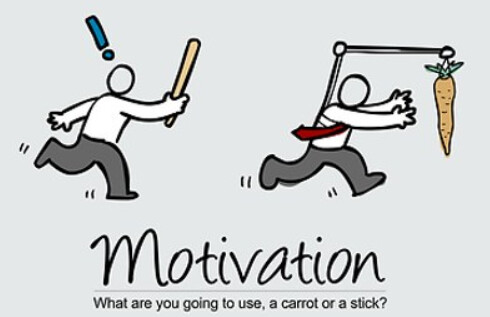
Ah, I was thinking of the same sutta! I remembered it by thinking of the Buddha using a carrot or a stick to teach. Now rereading it, I see now that using both is also an option.

2 Likes

Buddha is like a doctor, whereby his teaching are medicine to treat certain illness. Regarding afterlife, it’s to treat the “why bother” mindset. For certain people, they need a motivator / demotivator to prevent them from doing unskillful acts such as lying, stealing, harming, killing other. Just take a look at the current state of the world whereby majority people do not believe in afterlife and it’ll start to make sense why Buddha teaches the afterlife.

1 Like

Hi,

Hope I’m not misunderstanding you, but the Buddha’s teachings on rebirth are not mere tactics to motivate people.

In the Dhamma, rebirth is literal and real; it’s the ongoing propagation of saṁsāra, and the cessation of rebirth is the cessation of dukkha. :slightly_smiling_face:

Of course, this certainly is a motivator to practice the Dhamma. Just saying the rebirth teachings are not limited to this.

5 Likes

Wow, this is very confusing to me. I have long been under the impression that right action was based on an awareness of the causes and conditions of my actions. Using fear to motivate myself sounds like using my conditioned consciousness to employ negative emotions to guide me. If I need fear to follow the Path why do I need the Noble Eightfold Path to guide me. These two concepts seem to be in conflict. Will someone wiser than me explain why do I need a promise and a threat in juxtaposition.

2 Likes

You probably don’t! But it’s helpful for many people. Otherwise the Buddha would not have shared it.

It’s important to remember that the hiri-ottappa the Buddha taught are exclusively wholesome mental states. If one looks in the mind and see unwholesomeness when one is trying to practice them, then it’s not actually hiri-ottappa. It’s something else.

(Note: I’m not sharing this because I’m wiser than you. It’s just what I know from the suttas)

6 Likes

This is such an amazing and helpful note :smiling_face_with_three_hearts: :folded_hands:

4 Likes

Like Bhante Snowbird said, you may not need “the stick” to motivate your practice, but others may be able to use “the stick” to skillfully motivate their practice. Personally, my faith in the danger rebirth and samsara is a very strong motivator for my practice. In fact, it’s possible that my faith in this is not yet strong enough—because if it were, I would put more effort into the practice than I currently do.

As you progress along the path, you may see Dhamma teachings that you once found strange or even useless become practical and useful. That’s been my experience, anyway.

Even if you don’t have children, you’ve seen parents raising their children or can recall your own experience as a child. Don’t parents use rewards and punishment to raise their children, to teach them how the world works because they love them and desire their benefit? The Buddha often used the concepts of training and taming the mind as similar to training and taming a horse or elephant. Don’t trainers use rewards and punishment to train animals to become useful to humans? In behavioral science, it’s called operant conditioning.

(Also, I am not sharing this because I am wiser than you, either.)

“Suppose a deft horse trainer were to obtain a fine thoroughbred. First of all he’d make it get used to wearing the bit. Because it has not done this before, it still resorts to some twists, ducks, and dodges. But with regular and gradual practice its bad behavior is extinguished.

When it has done this, the horse trainer next makes it get used to wearing the harness. Because it has not done this before, it still resorts to some twists, ducks, and dodges. But with regular and gradual practice its bad behavior is extinguished.

When it has done this, the horse trainer next makes it get used to walking in procession, circling, prancing, galloping, charging, the protocols and customs of court, and in the very best speed, fleetness, and camaraderie. Because it has not done this before, it still resorts to some twists, ducks, and dodges. But with regular and gradual practice its bad behavior is extinguished.

When it has done this, the horse trainer next rewards it with a grooming and a rub down. A fine royal thoroughbred with these ten factors is worthy of a king, fit to serve a king, and reckoned as a factor of kingship.

In the same way, a mendicant with ten qualities is worthy of offerings dedicated to the gods, worthy of hospitality, worthy of a religious donation, worthy of veneration with cupped palms, and is the supreme field of merit for the world. What ten? It’s when a mendicant has an adept’s right view, right purpose, right speech, right action, right livelihood, right effort, right mindfulness, right immersion, right knowledge, and right freedom. A mendicant with these ten qualities is worthy of offerings dedicated to the gods, worthy of hospitality, worthy of a religious donation, worthy of veneration with cupped palms, and is the supreme field of merit for the world.”

-MN 65

2 Likes

I don’t think of them as negative emotions, but more of simple observations by our conditioned consciousness. For example, a path to the deathless would lose its meaning without death. Death is often preceded by severe pains and illnesses hence Jarā-maraṇa as one nidana reminds us of how the two are inseparable. Some would think of the after life as a bad destination based on what preceded it, in the sense that evil seldom leads to something good. Some would arrive at a different conclusion as the pain seems to cease after death so the destination can be good. As such, the path to the deathless seem to intersect with heaven and hell.

1 Like

Good point Bhante :slightly_smiling_face:

Such humility (anatimani), is mentioned in the metta sutta. Very inspiring. :anjal:

I know what you mean, we’d all like to do more and be further down the path, who wouldn’t :grin:

But it is a gradual path, and it’s totally in line with nature. In nature, things happen gradually, slowly in line with natural laws. It’s encouraging though, when you notice little changes in yourself, and you look back at how you were maybe a few years ago, and perhaps something that would’ve been a big deal for you back then, isn’t anymore, you can let go if it easily now.:anjal:

Well Asian (Filipino) parenting, they definitely use guilt (the Catholic way) and fear for sure :laughing:

Nice work with quoting the horse trainer simile :anjal:

3 Likes