
Well when I look at five aggregates, personally as a physics student in IGCSE, it’s easy to see the impermanence of the mental aggregates but rupa is harder. As far as I know in buddhism we have two concepts of Rupa from Sutta and Abhidahmma [later traditions]. In the sutta, we don’t see much of microscopic things as I also think it would be ridiculous if the Buddha was talking about quarks to the ancient people. I mean the Buddha is one of a kind - really know how to choose correct words. Sometimes my mind trick me into seeing rupa as if it’s impermanence. [I think seeing impermanence in mind is the easiest but non-self the hardest. Whereas seeing rupa’s impermanence is hardest but non-self the easiest] Like laws of conservation of energy and so on. Like sight and eyes are impermanent seems a little hard to comprehend sometimes. Any tips mates?
How is it not clear from physics that physical things are impermanent?
Any equations itself is describing what changes causing another thing to change. Just look at any equations, and you see change happening.
yes bhante. it’s just sometimes my mind tricking me perhaps 
You know about quarks, that means you know about quantum uncertainty in position and momentum. Also look up quantum foam. Nothing is as it seems in the quantum realm. Time Energy uncertainty relations itself already allows particles to pop in and out of existence by borrowing energy from the vacuum.
Get right view 
Any idea of impermanence or not-self that you have is wrong if you don’t have right view. Right view is understanding what those things are, what the Buddha was referring to.
I also think that it is ridiculous to think the Buddha was talking about atomic changes when he was talking about impermanence. I also don’t think he was talking about “things are continuously changing every whatever small amount of time you are talking about”.
Specially, because, from my perception, things are not changing. I think it makes more sense the fact that things are liable to change, as a better understanding and a closer idea to the Buddha’s teaching.
I do know about quantum fields where it’s proposed that the world is just quantum flutuations and energy are called like photon particles that comes and diappears or change.
Well, the Buddha has divine eye, he has psychic powers, he has past live recall, I wouldn’t rule out that he recalled some past lives when he learnt about quantum physics, and use divine eye to verify matter does behave like that.
Just because it would be hard to educate the ancients on all the terminologies of quantum physics, doesn’t mean that he didn’t personally know about it, and just say the important thing is impermanence.
Not really with a microscope, but through the lens of some training in samadhi (free of discursive thinking) and kayanupassana. For example with 4 elements observation as given in the Satipatthana Sutta (MN 10), one does observe kaya through the sensation-sense-door-consciousness contact. Thereby hardness, lightness, motion and temperature is directly experienced to fluctuate and change.
If thereby the thought of ‘impermanent’ arises, turn observation to that mind-sence-door-consciousness contact. And not merely saying, but experience how it also fluctuates. Means concepts have not to disappear completely, but they either resonate with what one is experiencing, or one is day-dreaming only.
Thinking about the changing in quantum-theory is not resonating with anything experienced, like this very kaya is. Daydreaming only, not leading to wisdom.
Yes Bhante, I also am thinking like that. Back in ancient India, he can just say these are impermanent bc they would just simply agree based on their ancient culture. But since the Buddha has divine eyes and many meditators in my country seems to report seeing little kalapas during deep samadhi, i also don’t wanna say the Buddha didn’t see those. I mean if normal people can, why wouldn’t the fully enlightened one. Impermanence does make sense if think of that way of flashing every second or generally now and then like quantum fluctuation and energy transfer. And one important note could be that the Sutta also didn’t record every single word uttered by the Buddha. Possibility also is that it wasn’t just necessarily to tell about these to ancient people since as long as we see impermanence in anything, we will as well see those in deep samadhi.
Even if he knew about quantum mechanics I don’t think he was talking about that at all. To be honest, no amount of scientific advancement will mean anything in the Dhamma, it won’t prove anything in the Dhamma. Not a single speck of noble wisdom.
Knowing about anicca, anatta and dukkha is what right view is, and science can’t possibly have the knowledge of right view. Otherwise, a great amount of scientists researching that would already be sotapannas just doing scientific research and a great amount of psychologists too, since they also know that the self is an illusion.
Also, everyone knows that things are changing, and everyone can’t be a sotapanna, hence, impermanence needs to be a different thing than things are changing. And even if you knew what impermanence is, as a puthujjana, the fact that you don’t know you know is already concerning, because knowing you know is what right view is.
My problem with this idea is that anyone could easily think: “Oh I know what impermanence is”, and thinking you know something means you don’t need to question that idea anymore, which honestly, is what the majority of Buddhists think, and yet, the majority of Buddhists are not even sotapanna. Knowing anicca means one know what anatta is, and knowing what anatta is means one know what suffering is. Most Buddhists also think that they know what suffering is, what the four noble truths is, and yet, they are not sotapannas. Actually, by taking for granted what they know suffering is, and the four noble truths are, just make them go far away from sotapanna.
A person accomplished in views can see impermanence in anything, any experience. They don’t derive from specific experiences (“Oh if in the microscope everything is moving/changing then this thing which is not in the microscope, but is made of microscopic things is also moving and changing”). They see a wall which from that perspective is not changing, and they see impermanence on it, they don’t imagine it.
Even if all we see is changing rapidly, where there is no thing standing still for even a moment, even then one wouldn’t become a sotapanna, because that which they are using to see (their mind, their eyes etc.), for them, are not changing.
Yes sir, I understand what you mean. I think here we have to separate two things. For theoretical understanding parts like clearing away doubts, understanding microscopic nature briefly somewhat helps, not to cling to though. But in actual vipassana, we don’t see those little things directly, that’s where choices come in I believe. Like, if we think in middle path, some yogis like in pa auk especially in burmese traditions follow the samatha method first and try to focus on those rupa kalapas which many says they can see. Because those little things do have their own lifespan and there are other mechanics. On the other hand, if one thinks understanding just the brief is enough, meditating on just the physical block of eyes, ears also work. I think both can work as long as we understand it.
I once followed a tradition called Theinnguu in myanmar when I was around 12. The sayadaw’s meditation may seems a little extreme but he’s regarded an arhant [ofc I mean we cannot certify someone as that but it is believeable with faith up to a degree.] In one of the Q&A, he answered that we cling to everything unless we see them as they really are showing example of a glass bottle. If we put an empty bottle on street, some adults might pick it up thinking they can still use it for something. But if we broke it, some kids might still pick up to play with it. But if we crushes them into dusts, no one would take it anymore metaphorically. I think if we go into samadhi I don’t see reason why we won’t see such small things. Interesting thing is Theinnguu sayadaw never studied the Abhidhamma or literally anything. He only knew how to do anapana. Because he became monk after being a land-pirate for such a long time.
I don’t think you did rs. I’m saying that any theoretical understanding like this is at best useless, at worse, misleading. It won’t clear away doubt, it will just be more subtle for you to pick. Doubt will still be there and will only go away with sotapatti, when you go beyond doubts.
My point is, after doing this technique are you a sotapanna? No? Then you didn’t get it yet. There is something you are still ignoring, hence, there is still ignorance at that level, the level of a puthujjana.
How about a quick thought experiment? 
Equipment needed
3 bored but intelligent students, preferably hating Physics
Their 3 physics textbooks
one large table
an observer with an open mind (and a bit of glue)
Method
-
Ask each student to show the observer their physics textbook. Just to confirm, ask “What are you holding in your hand?” Expected answer “My physics textbook”.
-
Ask each student to (carefully!) peel off the cover of their textbook and place it on the table. Just to confirm ask “What did you place on the table?” Expected answer - “The cover of my textbook”. Reconfirm “Just the cover, right? Not the textbook?”
-
Ask each student to (carefully!) peel off a page of their textbook and place it on the table. Just to confirm ask “What did you place on the table?” Expected answer - “A page of my textbook”. Reconfirm “Just a page, right? Not the textbook?”
-
Repeat step 3 till the students run out of pages to place on the table.
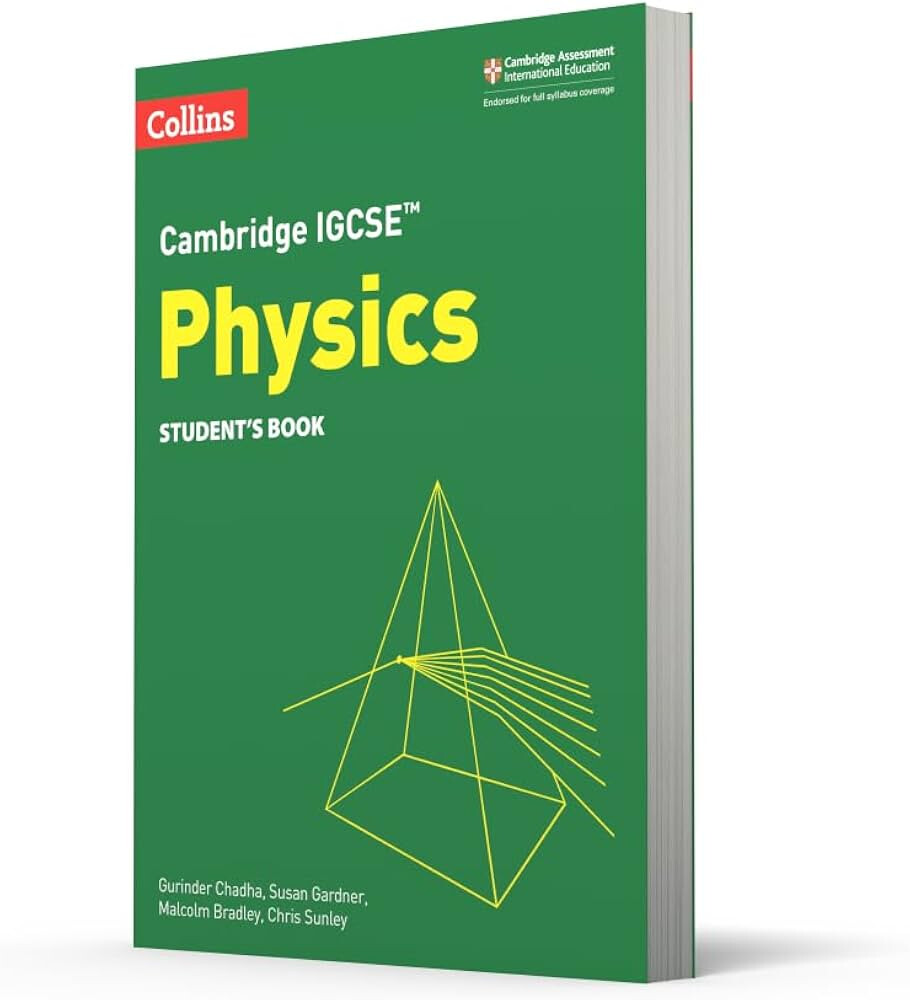

-
Now ask each student "Where is your textbook? "
-
Supplementary questions “What were you holding in your hand? Was it not your textbook? What did you place on the table? Was it not just the cover followed by pages? When did you ever place your textbook on the table? So where did the textbook go? Then is there no such thing as your textbook?”
-
Ask each student to pick up a cover and pages and reassemble them in sequence. (Provide glue - we don’t want their parents getting mad at us!). Ask “So is a textbook once again back in your hands?”
-
Supplementary questions “Is the textbook as it is now the same as it was at the beginning of the experiment? In what way is it different? What if some pages from one student’s textbook have now been rearranged as part of the other student’s textbook? Will they no longer function? Do the pages know that they belong to a particular textbook? If a student was attached to the notes he had written on particular pages, is it possible he could mourn the loss of his textbook? But is the textbook he now has not completely functional?”
Reflections
A textbook has a certain form - this is its ‘rupa’. This rupa consists of the 4 great elements. These elements, arranged in a certain sequence and fulfilling a certain function are what we label as a textbook (refer SN 5.10). The rupa we term as a textbook is real, we experience it as such. But it is empty of any Essence. It manifests on the basis of causes and conditions, when those causes and conditions cease, the elements disperse and the rupa no longer manifests… till suitable causes and conditions cause the rupa to rearise. Arising is seen, vanishing is seen, alteration while it persists is seen (refer SN 22.37 - SN 22.39). Hence we say that rupa is Anicca.
I think an important exercise to be done would be: did we need a Buddha to have discovered this? The Eightfold Path, the Dhamma, is so rare and so difficult that only a Buddha would be capable to discover it and teach it in a way and with a diversity necessary for the people with dust in their eyes to see.
Nothing about the Dhamma is intuitive, and we waited for long years untill our Buddha discovered the Path again. Before him, we were lost, without a guide, in the dark. If the Buddha was born in this world, to think that anything spealing from his mouth would be knowledge varying from one that any 10yo child could have come up with to one that any scientist would be familiar with is certaily strange for my head.
I met many people that said that what the Buddha said was very obvious (and his merit was saying the obvious) and I always get surprised by this statement, because for me it is never obvious at all. My point here is not to discuss what idea of impermanence is right or wrong, but to remind us puthujjanas that we don’t know anything and we shouldn’t forget we don’t. Like the Venerable Nanavira said on the Nanavira’s note on Paramattha Sacca,
The unwary thinker comes to believe that he understands what, in fact, he does not understand, and thereby effectively blocks his own progress.
Yay!
… if cultivated and made much of, intent concentration on in-breathing and out-breathing is something peaceful and choice, something perfect in itself, and a pleasant way of living too.
(SN 54.9, tr. Pali Text Society SN V p 285)
In the same way, when this immersion due to mindfulness of breathing is developed and cultivated it’s peaceful and sublime, a delectable and blissful meditation. And it disperses and settles unskillful qualities on the spot whenever they arise.
(SN 54.9, tr. Bhikkyu Sujato)
Well friend, you indeed sound quite nicca about that!
On my part, I’m with Brahma Sahampati…
SN6.1
There will be those who understand the teaching!

Well, I do caution using science to prove Buddhism, but maybe you would want to read the case below before jumping into general conclusion.
1 billion years from now life may disappear from Earth?
Intellectual understanding is different from realization. I don’t think it’s too hard to intellectually understand impermanence, not self and suffering. One can very well guide an open minded scientist to this viewpoint for all constructed things. It’s the practise to realize it deeply that’s the key.
And having the background of understanding how the body works biologically, can actually help in already knowing that the body is not a hiding place for the soul.
Having understanding of physics, already can help in dispelling any seeking of eternal things in form.
We all have to start from theory, to reflection then to realization. Many sutta praised great learning.
Indeed, one learning science without dhamma background might miss out how to reflect in such a way to help develop the path, to see impermanence suffering and no self, or might need someone else to point it out how to reflect. Like in the OP, and I pointed out how to reflect.
That is one more explaination why scientists in general might know the facts but miss the insight. As the dhamma is universally applicable, it should also be able to be applied to things discovered by science, one shouldn’t be afraid to apply the dhamma and see how such insights can arise from scientific findings and if scientific findings helps to deepen the insight, all the better!
well my friend. I don’t really want to argue on that given that I am trying to prevent my overthinking (overanalysis) mental loops. But I kindly suggest that we cannot really jump into such one-sided conclusion for many cases. Yes, we don’t necessarily need science to prove buddhism. But being aware of the convergence between dhamma and science is helpful for at least general understanding. The fact is if u actually strip away many of the scientific interpretations from such theories, the actual observational empirical data usually tend to be in align with the dhamma. [I made this post bc I wanna hear different perspectives on the topic too.] Also, I do know that many EBT-anchored students tend to be cautious about too deep-analytical claims such as in abhidhamma to not get carried away but like Ven. Nyanaponika suggested, the Buddha dhamma isn’t contrary to any philosophical thinkings. The only caution the buddha made was to not get carried away by too much analysis as logic can backfires. As long as we balance saddha-panna I personally think great learning has no harm. I agree with u that just understanding doesn’t make one sotapanna. Bc many of my traditional burmese sayadaws like Mingun Sayadaw [6th monk council question answerer] who memorised the whole tipitaka including sutta and abhidhamma and vinaya over thousands of pages wasn’t enlightened. Whatever u read either just EBTs alone or the whole tipitaka, agamas or anything, we all start from Theory. If u just claim “You know what, only accept the things that come from EBTs, discard everything” is a little bit not according to the spirit of Dhamma I think. Because if u look at I think it’s called “Mahagosinka sutta” (name may be a little wrong) the one many abhidhammika used for centuries to validate it, from which actual term “Abhidhamma” meant “General discussion on the dhamma”, u can see that the Buddha praised higher discussion on the dhamma as long as u can get some insights from it. Because at least smth is better than nothing. I don’t mean ur interpretation is wrong, but I mean there can be different interpretations that different people can use.
I don’t mean we have to accept every single things science say or commentaries and abhidhamma say. But, I feel like as long as it’s useful, why can we not take it? I think most people miss the fact that the Buddha didn’t just continuously shout “ESCAPE, RUN RUN FROM SAMSARA”. [just a little joke, don’t mind]. He taught for both Lokiya and Lokuttara Dhamma if I remembered correctly. Like in Mingla sutta, the Buddha encouraged great learning too.