Hi friends…
I’d like to share this news with you!
New Centre of Excellence for Pali Language Studies Faces Backlash from Scholars in India
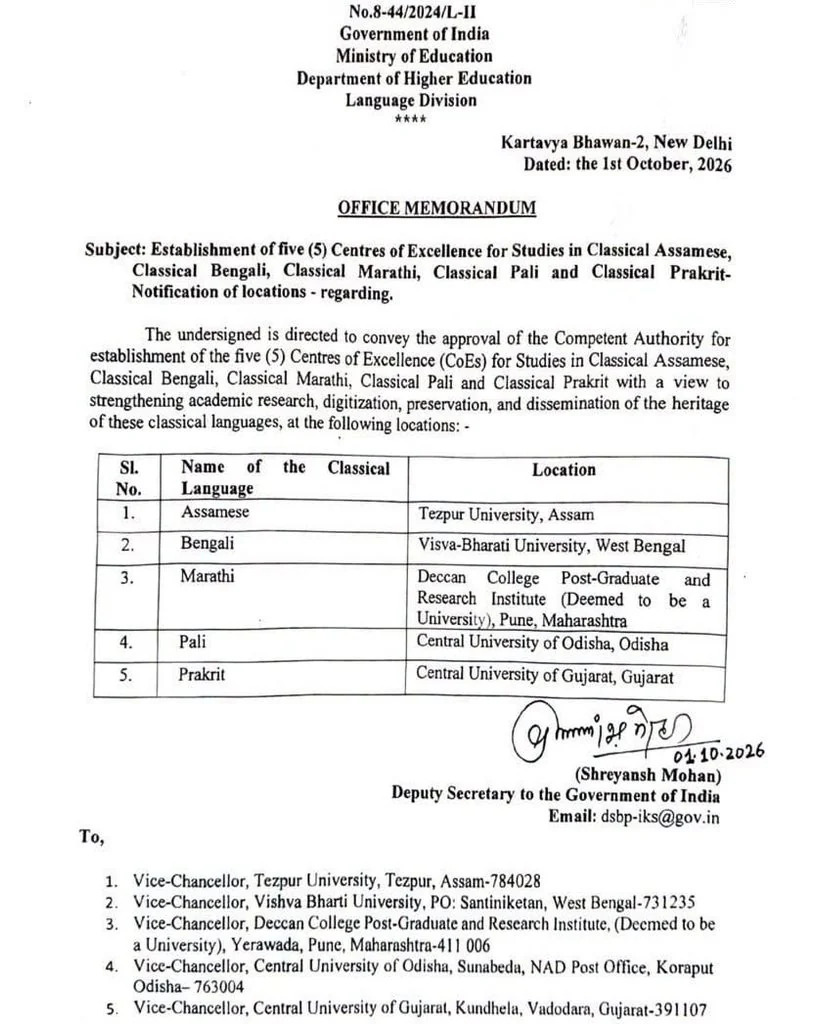
The planned establishment of a Centre of Excellence for Pali Language Studies at the Central University of Odisha has drawn criticism from scholars across India. The initiative, recently approved by the Department of Higher Education under India’s Ministry of Education, aims to set up five Centres of Excellence for the study of classical languages, including Assamese, Bengali, Marathi, Pali, and Prakrit.
According to a report in The Hindu newspaper, the initiative is aimed at providing dedicated institutional support for advanced academic research, the preservation and digitization of linguistic and literary heritage, and the broader dissemination of knowledge associated with India’s classical languages.
Odisha’s chief minister, Mohan Charan Majhi, expressed support for the center, stating on social media: “The Ministry of Education’s approval of a Centre of Excellence for Classical Pali at the Central University of Odisha will strengthen the study, preservation and promotion of Pali, a language deeply connected with India’s intellectual, spiritual, and cultural traditions.” (Mohan Charan Majhi Facebook)
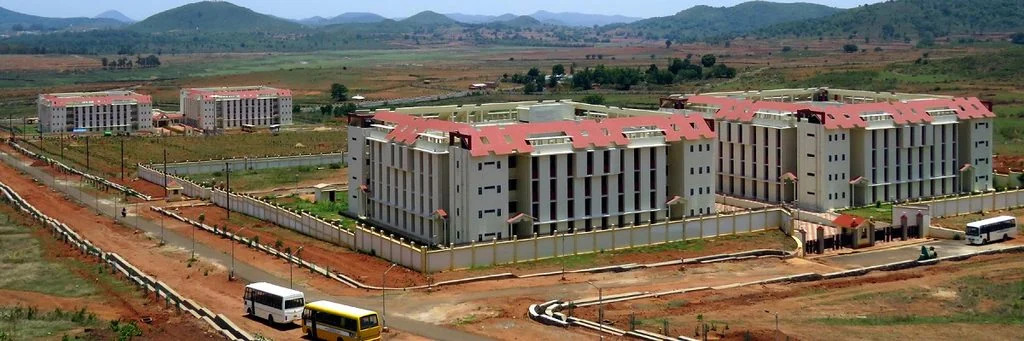
Central University of Odisha. From iesonline.co.inHowever, the decision to establish a center for the study of Pali has drawn criticism from scholars, including those specializing in Pali and Buddhist studies.
The Telegraph newspaper reported concerns expressed by former UGC secretary R. K. Chauhan that such centers were typically established in universities with existing departments in the subjects in question, as institutions without such departments may lack the expertise for effective operation. The Central University of Odisha does not have a department for Pali studies.
Meanwhile, the head of the Department of Buddhist Studies at Calcutta University, Prof. Ujjwal Kumar, likened the establishment of a center for Pali studies at the Central University of Odisha to opening a Centre of Excellence for the Odia language in Bihar.
“It is worth noting that the original name of Pali is ‘Magadhi’—that is, the language of historical Magadha (present-day Bihar),” Prof. Kumar stated. “Viewing it in this historical context, the deemed university ‘Nava Nalanda Mahavihara’ in Bihar would have been the most appropriate institution for a Pali Centre of Excellence.” (Ujjwal Kumar Facebook)
Prof. Kumar highlighted the historical significance of Pali studies, stating: “Looking at the history of modern Pali studies, academic instruction in Pali began at the University of Calcutta as early as 1907, where two separate departments—Pali and Buddhist Studies—continue to function today.” (Ujjwal Kumar Facebook)
He also suggested several other suitable academic institutions, including Nalanda University in Nalanda, Banaras Hindu University in Varanasi, Savitribai Phule Pune University and the University of Mumbai in Maharashtra, where Pali is already taught through dedicated departments.
From Ujjwal Kumar FacebookThe establishment of the Centre of Excellence for Pali Language Studies represents a further step by India’s central government, led by Prime Minister Narendra Modi, to officially recognize Pali as a classical language of the nation, as announced on 3 October 2024. This announcement, which also included Assamese, Bengali, Marathi, and Prakrit, was welcomed by scholars, historians, and the Buddhist community for acknowledging Pali’s influence on India’s cultural and religious heritage.
Nonetheless, in the context of the Centre of Excellence for Pali, Prof. Kumar remarked: “The decision taken in the context of the resolution and foresight with which the prime minister had given ‘Classical Language’ status to Pali in 2024 does not seem logical and fair.” (Ujjwal Kumar Facebook)
He further advocated for the establishment of independent Pali departments in central and state universities in Odisha before creating a Centre of Excellence in Pali.
“It is as right to open a center of excellence in an institution without a basic academic department as it is to expect the birth of a child without a mother,” Prof. Kumar concluded. (Ujjwal Kumar Facebook)